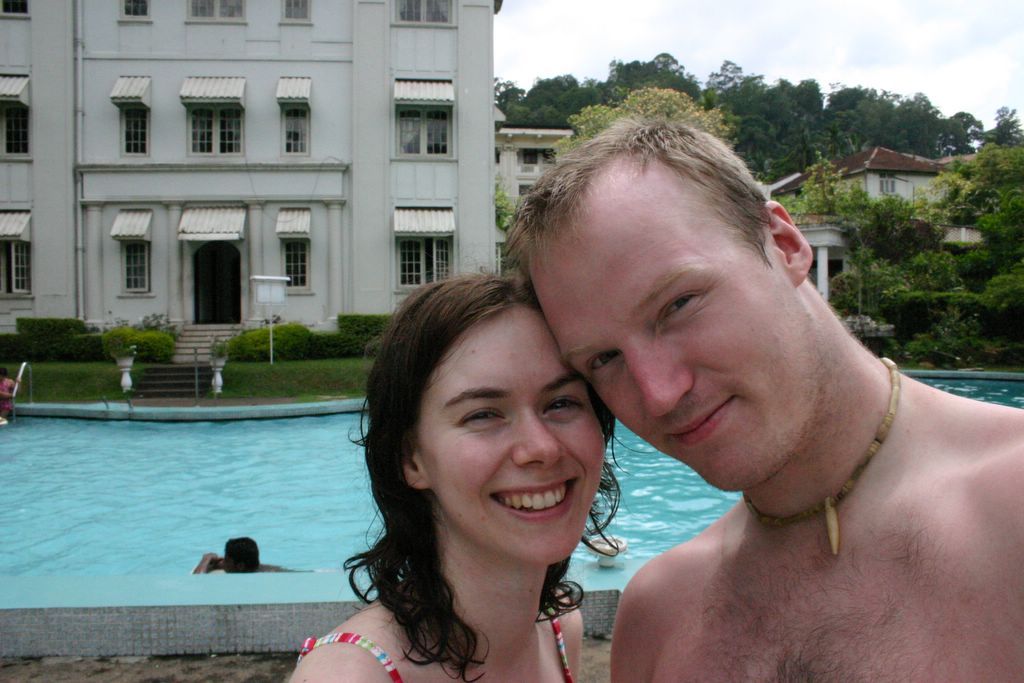
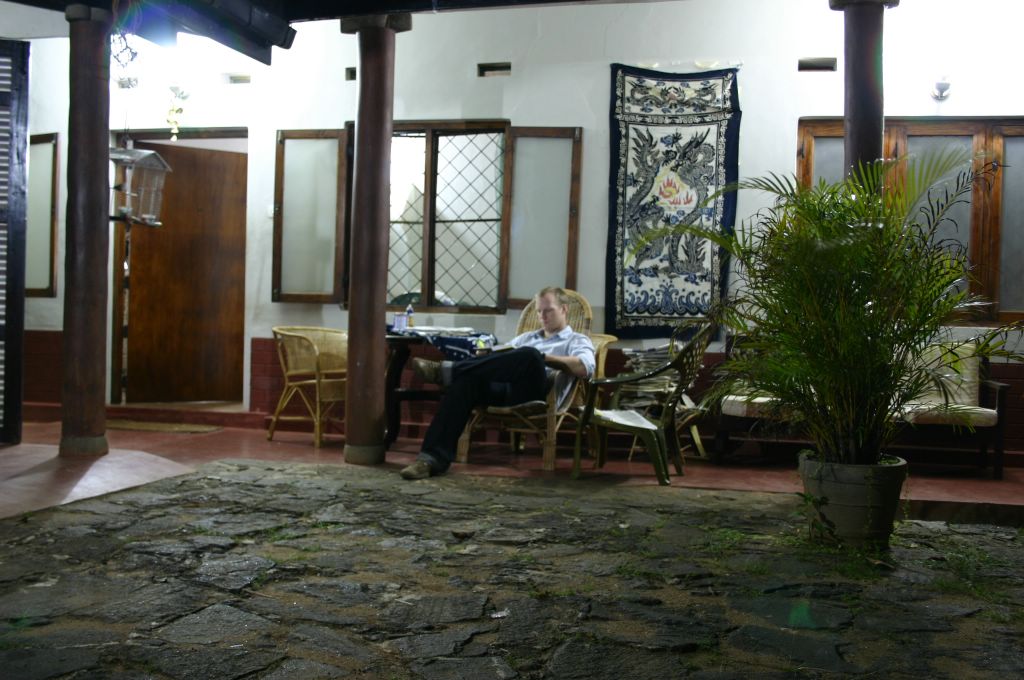
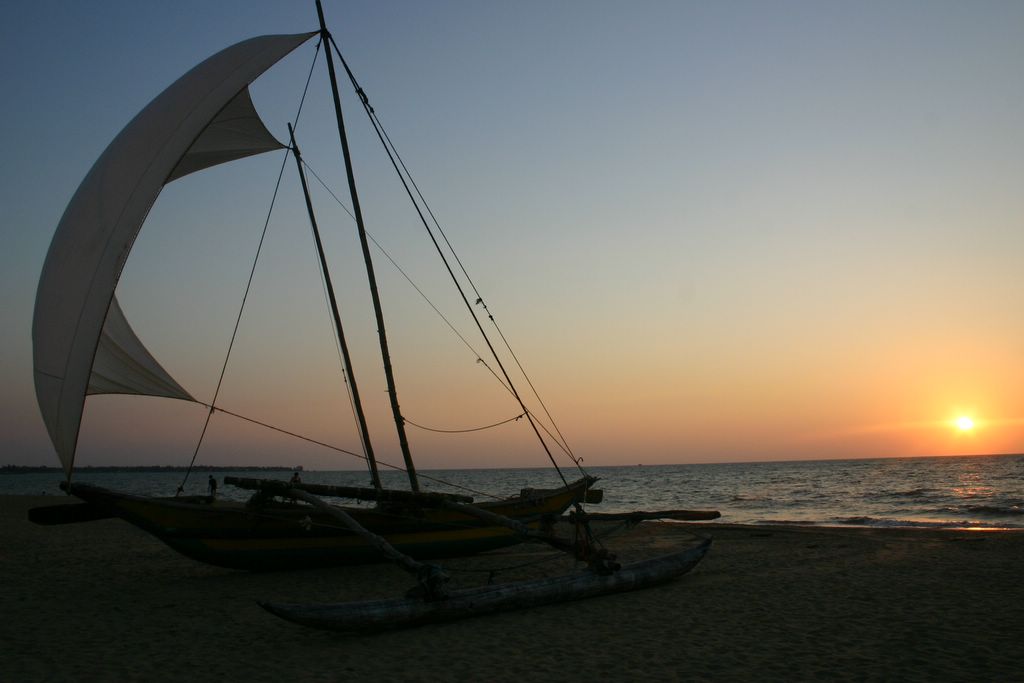
Photomania
As you can see I have figured out how to post pictures on my blog! Quite a breakthrough! Although I have many, many lovely photos I will try not to overdo it :)
/haakon/
31.3.05
21.3.05
Heartshaken, Fieldbroken
- but the show must go on...
She came, she kissed through tears, and then swept through my parallell Srilankan universe in a haze of fever, sunburns and snake phobia. Sure, it may have had all the ingredients of the holiday from hell but our two-week fieldbreak was a huge success. I am sure you all know that empty feeling of the return to everyday life after a holiday spent with loved ones. I can assure you that the very same sad emptiness awaits you even if you're an anthropologist and your everyday life takes place in an exotic place like Sri Lanka.
Silje and I met last fall at an introductory seminar for the 1st year batch of the social anthropological M.A. program at NTNU. We celebrated our 6th month anniversary the day she arrived in Sri Lank. Being away from one another at this early stage is of course no fun, but anthropologists gotta do what anthropologists gotta do. Her enthusiasm is with the conflict in Northern Ireland - mine is with this troubled island. So we decided not to let romantic interest interfere with academical interest at this point and in January took up residence in each our global hot spot. Her original intention was to study protestant-catholic marriages from the inside, but trust is a rare commodity in Northern Ireland and mixed marriage couples are particularly exposed to pressures from paramilitary factions and therefore understandably cautious of who they allow into their spheres of intimacy. In other words: she couldn't find a couple to live with. She ended up scrapping her research proposal, looking for alternatives. After having made some contacts among young republicans she settled for spending her time with Ogra - Sinn Feins youth movement. Often dubbed the political wing of the IRA, Sinn Fein and Ogra Sinn Fein claim legitimacy for their struggle and the way it is carried out. Silje, an ardent socialist, is furthermore intrigued by their socialist stand. But are they socialists in a true sense?
Well, this entry wasn't supposed to be about Siljes research, nor about mine, but about our two weeks together in Sri Lanka. At first this felt a bit like two worlds colliding. I recall that when I was working for EF Foundation's high school exchange program, we would warn exchange students-to-be of the dangers of accepting visits from family and friends at an early point of the stay. That this meeting of the old and the new will mess with your mind. Meeting Silje, tears flowing, at Bandarnaike Int'l Airport, outside Colombo, I did have some problems fitting it all together, but my mind switched to holiday mode soon enough. Being with each other after two long months was the only thing that mattered. Well, of course Silje was going on about the nice temperature and the beach in Negombo (where we spent our first day at the Icebear Hotel) and the general exotic flavour to it all - things that were completely lost on me.
After a day in tsunami-untouched Negombo, where the beaches are quite allright but nothing by Lankan standards, and a day of shopping in some of Colombo's trendier places, we headed for the hill country. This was when the fever kicked in and Silje barely had the energy to get out of bed for a week, while I nursed the best I could. It was perhaps a flu triggered by the change of climate - nothing too serious - but it meant the scrapping of the holiday plans I had surpassed myself in making (normally I'm incapable of planning past a 3-day horizon). The climbing of Adam's Peak would have to go and so would the day-trip to Pinnawela Elephant Orphanage - not to mention the grande finale I had planned at the southern beaches. But Silje did muster the energy to get out of bed every now and then. We did make it out to campus one day and another day we attended a charity concert for tsunami victims, staged by and with performances by local students. We even got to see one of the 80 or so species of snakes in the wild, or at least semi-wild of the Royal Botanical Gardens. When I say "we" that is a blatant lie. I never saw it, but Silje who has the worst snake phobia did, and had nightmares of snakes for nights to come.
Halfway through the holiday, upon recovery from the flu (let's not get into the digestive problems at all) we decided to celebrate by the pool of nearby Hotel Suisse. We did use sun lotion and we were only in the midday sun for a couple of hours, but this fatal sunbathing was enough to immobilize us for two more days, each of us being equally scolded (two weeks later we were both still peeling). There was something incredibly comical about this however, that kept our spirits up, and when we finally left Kandy, heavy backpacks on sore shoulders, it was without the feeling of having wasted precious time there.
The last few days we did a blitz on the ancient cultural sites of Dambulla (cave temples filled with Buddha images), Sigirya (the ruins of a capital fortress perched on a giant rock) and Polonnaruwa (ruins dating to the time the city was capital for 250 years or so at the beginning of the second millennium), before returning to Negombo, preparing for and dreading the goodbye scene at the airport. This would be the second of three difficult airport goodbyes, the first one took place in January at Oslo Int'l Airport, the third one will take place in Belfast in the end of June, less than three months from now. Yes, the ticket is bought and paid for, and now that she's gone I catch myself peaking at the calendar, counting the days. Readjusting to fieldwork mode was more difficult than I anticipated (why would the advice I lavishly unloaded on future exchange students also apply to me?). On returning to Johns house (which we had avoided due to Siljes fear of snakes) I found my toilet was invaded by ants and to giant spiders had taken up residence behind it. At the same time I had rats fighting behind closets and inside cupboards. Now why would I feel lonely?
I am very fortunate to have made several good friends at the university - friends who this week took me along for a 4-day trip that I hope to write more of later. That snapped me back to this reality and I realize I am thorougly enjoying myself her, even if I have to fight red tape at the university and still don't know what I am really looking for. And when Silje and I move in together in Trondheim this fall, it will be knowing we have made the right decissions. Meanwhile the show must go on.
/haakon/in/kandy/
- but the show must go on...
She came, she kissed through tears, and then swept through my parallell Srilankan universe in a haze of fever, sunburns and snake phobia. Sure, it may have had all the ingredients of the holiday from hell but our two-week fieldbreak was a huge success. I am sure you all know that empty feeling of the return to everyday life after a holiday spent with loved ones. I can assure you that the very same sad emptiness awaits you even if you're an anthropologist and your everyday life takes place in an exotic place like Sri Lanka.
Silje and I met last fall at an introductory seminar for the 1st year batch of the social anthropological M.A. program at NTNU. We celebrated our 6th month anniversary the day she arrived in Sri Lank. Being away from one another at this early stage is of course no fun, but anthropologists gotta do what anthropologists gotta do. Her enthusiasm is with the conflict in Northern Ireland - mine is with this troubled island. So we decided not to let romantic interest interfere with academical interest at this point and in January took up residence in each our global hot spot. Her original intention was to study protestant-catholic marriages from the inside, but trust is a rare commodity in Northern Ireland and mixed marriage couples are particularly exposed to pressures from paramilitary factions and therefore understandably cautious of who they allow into their spheres of intimacy. In other words: she couldn't find a couple to live with. She ended up scrapping her research proposal, looking for alternatives. After having made some contacts among young republicans she settled for spending her time with Ogra - Sinn Feins youth movement. Often dubbed the political wing of the IRA, Sinn Fein and Ogra Sinn Fein claim legitimacy for their struggle and the way it is carried out. Silje, an ardent socialist, is furthermore intrigued by their socialist stand. But are they socialists in a true sense?
Well, this entry wasn't supposed to be about Siljes research, nor about mine, but about our two weeks together in Sri Lanka. At first this felt a bit like two worlds colliding. I recall that when I was working for EF Foundation's high school exchange program, we would warn exchange students-to-be of the dangers of accepting visits from family and friends at an early point of the stay. That this meeting of the old and the new will mess with your mind. Meeting Silje, tears flowing, at Bandarnaike Int'l Airport, outside Colombo, I did have some problems fitting it all together, but my mind switched to holiday mode soon enough. Being with each other after two long months was the only thing that mattered. Well, of course Silje was going on about the nice temperature and the beach in Negombo (where we spent our first day at the Icebear Hotel) and the general exotic flavour to it all - things that were completely lost on me.
After a day in tsunami-untouched Negombo, where the beaches are quite allright but nothing by Lankan standards, and a day of shopping in some of Colombo's trendier places, we headed for the hill country. This was when the fever kicked in and Silje barely had the energy to get out of bed for a week, while I nursed the best I could. It was perhaps a flu triggered by the change of climate - nothing too serious - but it meant the scrapping of the holiday plans I had surpassed myself in making (normally I'm incapable of planning past a 3-day horizon). The climbing of Adam's Peak would have to go and so would the day-trip to Pinnawela Elephant Orphanage - not to mention the grande finale I had planned at the southern beaches. But Silje did muster the energy to get out of bed every now and then. We did make it out to campus one day and another day we attended a charity concert for tsunami victims, staged by and with performances by local students. We even got to see one of the 80 or so species of snakes in the wild, or at least semi-wild of the Royal Botanical Gardens. When I say "we" that is a blatant lie. I never saw it, but Silje who has the worst snake phobia did, and had nightmares of snakes for nights to come.
Halfway through the holiday, upon recovery from the flu (let's not get into the digestive problems at all) we decided to celebrate by the pool of nearby Hotel Suisse. We did use sun lotion and we were only in the midday sun for a couple of hours, but this fatal sunbathing was enough to immobilize us for two more days, each of us being equally scolded (two weeks later we were both still peeling). There was something incredibly comical about this however, that kept our spirits up, and when we finally left Kandy, heavy backpacks on sore shoulders, it was without the feeling of having wasted precious time there.
The last few days we did a blitz on the ancient cultural sites of Dambulla (cave temples filled with Buddha images), Sigirya (the ruins of a capital fortress perched on a giant rock) and Polonnaruwa (ruins dating to the time the city was capital for 250 years or so at the beginning of the second millennium), before returning to Negombo, preparing for and dreading the goodbye scene at the airport. This would be the second of three difficult airport goodbyes, the first one took place in January at Oslo Int'l Airport, the third one will take place in Belfast in the end of June, less than three months from now. Yes, the ticket is bought and paid for, and now that she's gone I catch myself peaking at the calendar, counting the days. Readjusting to fieldwork mode was more difficult than I anticipated (why would the advice I lavishly unloaded on future exchange students also apply to me?). On returning to Johns house (which we had avoided due to Siljes fear of snakes) I found my toilet was invaded by ants and to giant spiders had taken up residence behind it. At the same time I had rats fighting behind closets and inside cupboards. Now why would I feel lonely?
I am very fortunate to have made several good friends at the university - friends who this week took me along for a 4-day trip that I hope to write more of later. That snapped me back to this reality and I realize I am thorougly enjoying myself her, even if I have to fight red tape at the university and still don't know what I am really looking for. And when Silje and I move in together in Trondheim this fall, it will be knowing we have made the right decissions. Meanwhile the show must go on.
/haakon/in/kandy/
23.2.05
On strike!
Time passes quickly for the anthropologist in the making (hardly a revolutionary remark, I know). I've sunk into an everyday routine of sorts - a routine I'm afraid involves too frequent trips to the internetcafés of the city. Still, my health is fine and I've managed without the drastic weightloss I anticipated. I'm even quite happy where I am and have been so most of the time. That is, after arrival on the island I had a day of panic and a week of anxiety. The period thereafter is best described as a gradual motion from discomfort to content. I suppose this settling in was a result of the settling of some of the most overwhelming issues I had to deal with before getting to work. I chose my field, I made my entrance in it, and now I have even found a semi-permanent residence which is not a hotel. Still there are a number of things to be sorted out, though.
1) The university has yet to accept me as a "casual student" (their term) and have, it seems to me, in stead attempted to stall me. The casual studentship, which they set as a prerequisite for giving me permission to conduct research, is to be discussed in a meeting this week. My final application consisted of a letter written by me, a letter from the Department of Social Anthropology at NTNU, a rather flattering letter of reccomendation from the head of the master degree program and my transcript from NTNU. It took a while to get this all sorted out, especially as it took some time before anyone would tell me that these items were necessary. I suppose that is just how south Asian bureaucracies work. I may be conceited to think the Vice-Chancellor has it in for me... but then again? Could they be afraid that my research would damage the university's reputation? Either way, the situation of today is that I am not officially doing fieldwork on campus - I'm just paying it a lot of visits.
2) My other worries are more methodological, related to the research itself. How should I spend my time on campus? Should I focus on one group, and then perhaps the group that has more or less adopted me now, consisting predominantly of freshmen Indian Tamils (also called estate or upcountry Tamils) at the Arts Faculty? Or should I spend time in other areas of campus too, perhaps in the Faculty of Engineering or the Faculty of Medicine, where the instruction is in English and interethnic relations therefore may be of a different kind. The latter option is what I had planned but I'm afraid of spreading myself "too thin". Then there is the question of learning a language. Should I devote myself to learning either Singhalese or Tamil? If so, which one? The majority language or the language of most of my informants as of today? Deciding to learn a language would mean having to invest a lot of time and energy into it. Perhaps that time and energy would be better spent on campus, with my informants? Then again, there is a lot I am losing out on now, especially when the informants are talking to eachother.
I am hesitant and most often when I am heistant I end up doing nothing. In fact, I have been wondering which language to learn, Singhalese or Tamil, for half a year which is why I haven't learned any of them. Good on me!
Still, I do believe some insight, paradoxically enough, can be gained from NOT knowing the local languages. Many Tamilspeaking students do not speak or even understand Singhalese. These are effectively cut off from the majority's information channels and fora. This I have known for a while but just really understood it this week. When I arrived at the university this Monday I immediately noticed that the non-academical staff, who had been on strike from Wednesday the previous week were back at work. They're strike had been about what seemed to me a minor issue - a new policy issued by the Vice-Chancellor demanded that they would all sign in at one place in the morning, in stead of at their respective work places. The argumentation was that it would be more difficult to show up late but the non-academical staff complained that this policy is demeaning and a waste of time. The students remained apathic towards this strikes. When I asked them about it, they complained it disrupted their studies. Most students were in the middle of having their mid-semester exams but the strike saw the library closed and several lectures cancelled, as the non-academical staff are in charge of the keys. Other unpleasant results of the strike were dirty toilets and overflowing trash cans. But like I said, Monday this strike was finished, although I have not heard if the VC's new policy was defeated.
Monday there was talk of another strike, though. This time the students would go picketing it was said. At noon 3-400 students showed up for a General Body meeting, led by the Student's Union President, who also happens to be a buddhist munk, a bhikku. He spoke charismatically for fifteen minutes or so. After he finished I asked one of my Tamil friends for a translation. He said something in the line of "How would I know.. he was speaking Singhalese". Still, the gist of the speach was relayed to me by my good friend Selva (a pseudonym as I may chose to hide his identity in my thesis) who is bilingual and in addition has a reasonable command of English. The students were upset about the government wanting to privatize the tertiary education system by allowing private colleges to become degree-awarding. Most Sri Lankans are proud of the fact that education (as well as health care) is free for everyone. There are no tuition fees in the university and most students are offered accomodation for 75 SLR (0,75 USD) a month and recieve scholarship money or no-interest loans to cover most of their living expenses. Still it is difficult for people like Selva who come from very poor families. Indeed, as I was do discover while going on a trip with Selva two weeks ago to his village near Badulla, he is the first from his village to go to a university and is considered somewhat of a hero for that. This is because most estate workers can't afford to pay for their childrens' expenses on campus, even with the support of scholarships, but also because there is a lot to be desired from primary and secondary education in rural areas, and particularly in the hill country. There is an acute shortage of qualified teachers, especially in mathematics, science subjects and English.
There is reason to believe that the selfproclaimed socialist JVP-party has been involved in staging the student protest, which would be a nationwide venture. Students would spread out to all major towns and cities. The JVP has ever since the student uprisings of '71 and '89 been a force to reckon with in Srilankan campuses and students I have talked to claim the Student's Union President as well as several of it's others executive members are strigent JVP supporters. The executive committee has a composition reflecting the language make-up of the student body, meaning only one of seven members is Tamilspeaking, effectively rendering the Tamilspeaking students powerless in that fora. This was again quite appearant as I showed up on campus early Tuesday morning, ready to go picketing.
I met Selva and a number of his friends and we had breakfast together in one of the student cafeterias. The atmosphere was relaxed and nothing special seemed to be in the air. At 9am the Student's Union President gave another address, but this time his audience had shrunk to a mere hundred or so listeners. Again, the students were only addressed in Singhalese. Following the speach however, the Tamilspeaking Student's Union representative took charge over "my" group, giving them instructions. Turns out we were sent off to Hatton (a dirty town en route to the holy mountain Adam's Peak, nearly 3 hours from Peradeniya by bus), not to picket but to collect money to cover the campaign expenses. We were given a bunch of flyers (printed in Singhalese only) and money-boxes and sent off. On our way to the busstop the students were joking that Selva could speak to whoever needed information in Singhalese and I could speak if someone needed information in English.
Arriving in Hatton and taking to work we soon encountered problems however. The flyers we were carrying only seemed to provoke the predominantly Tamilspeaking population of the area. Some were downright angry at the fact that we had no information in their language. One of our crew had sought to correct this before we started by translating the essence of the flyer to a separate note that we carried with us. This, I suspect led some to beleive we were running a scam. Some were also startled at my presence, but seemed to accept that I was a foreign student when this was explained. After making 3-4 calls on businessowners it was decided that the flyers be put away in my backpack as they did more harm than good. They would only occasionally see the light of day when we entered the odd Singhalese shop.
As this first barrier was cleard people's generosity surprised me. We ended up collecting a good bit of money by local standards, in fact more than 1700 SLR (17 USD), in less than three hours work. I am still at a loss in understanding the Student's Union's complete disregard for the Tamils, however. Wheter they were just underestimating the Tamilspeaking populations' magnanimousity or whether they were plain ignorant, it seems to me to be a sign that the Tamilspeaking people of Sri Lanka are exluded from many arenas where the majority population are calling the shots. The students were themself trying to explain this to the first shopowner we spoke to, stressing that at Peradneiya the Tamils and Muslims are by far outnumbered.
I don't know if the "strike" on national level was a success or not. It recieved minimal attention from the media, but then again this is a nation that is quite used to strikes and protests of various kinds. Then again, if student turnout was as bad in other universities as it was at the Faculty of Arts at Peradeniya, then this cannot be interpreted as a massive protest from a unanimous student body. The low turnout came as a surprise to me, though. I have not been able to track down a debate on the issue of privatization, either on campus or in the media. Selva first claimed all students were in agreement on this and explained the low turnout by people being lazy and wanting to sleep in. I suppose that would be the case with most Norwegian and Western students too.
Personally I have to call the strike a raging success. It raised a number of interesting questions for my research as well as bringing me closer to my informants.
To make a drastic jump to something else: I mentioned in the beginning of this text that I have found a new place to live. Living in a hotel was safe and comforting, but lulled me into feeling like a tourist most of the time, doing "9-5 anthropology". The move is I think, a move in the right direction, although perhaps not an ideal sollution to the problem of residence. I met by chance an American man on campus - a man with a rather impressive appearance, sporting a wild beard and a pony tail. John Mensing is researching Buddhism and has been working on an M.Phil. degree for the last 3 years. Up until recently he was kept company by his Japanese wife and two children, but they decided to return to Japan as John finishes up his work, and he should be done in a couple of months. John is renting a large house set in a tranquil forrest near Kandy and had as a result of his new bachelor existance several vacant rooms. He gave me a ride home on his motorcycle (and doing that we blew the shock absorber) and although the interior was in a serious state (the word messy has recieved a new dimension for me) I could se potential. And most importantly, John seemed like a nice guy and I could see him helping me out with a thing or two in my own research. So it was decided that I'd move in and make this my home for a while. It is still inconveniantly far away from campus, however, and if I should be offered accomodation closer I will probably go for it.
/haakon/in/kandy/
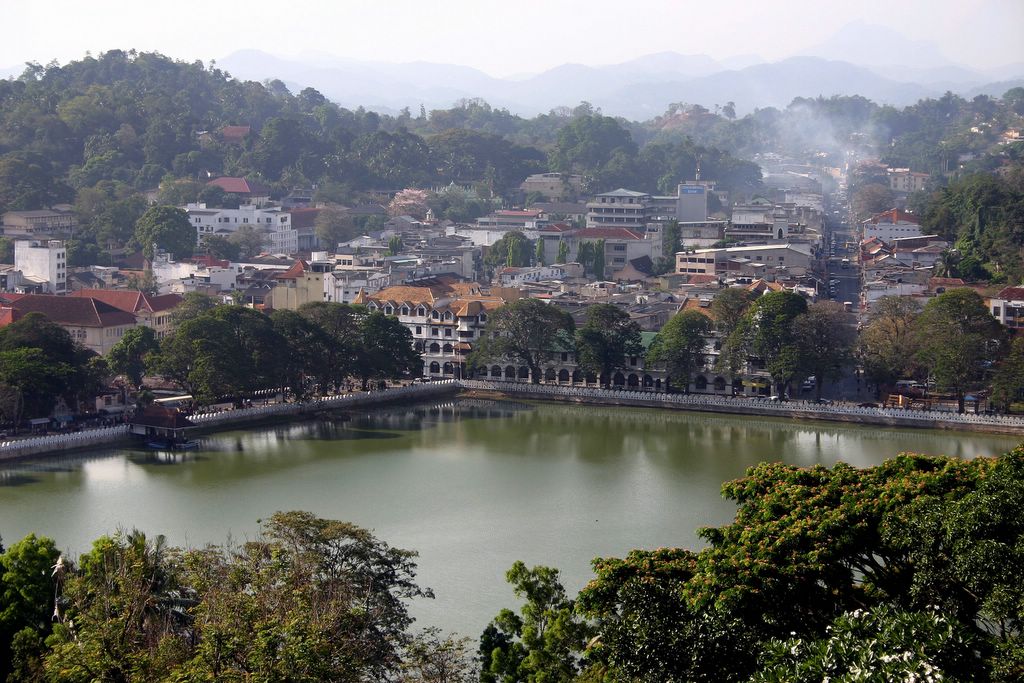
Time passes quickly for the anthropologist in the making (hardly a revolutionary remark, I know). I've sunk into an everyday routine of sorts - a routine I'm afraid involves too frequent trips to the internetcafés of the city. Still, my health is fine and I've managed without the drastic weightloss I anticipated. I'm even quite happy where I am and have been so most of the time. That is, after arrival on the island I had a day of panic and a week of anxiety. The period thereafter is best described as a gradual motion from discomfort to content. I suppose this settling in was a result of the settling of some of the most overwhelming issues I had to deal with before getting to work. I chose my field, I made my entrance in it, and now I have even found a semi-permanent residence which is not a hotel. Still there are a number of things to be sorted out, though.
1) The university has yet to accept me as a "casual student" (their term) and have, it seems to me, in stead attempted to stall me. The casual studentship, which they set as a prerequisite for giving me permission to conduct research, is to be discussed in a meeting this week. My final application consisted of a letter written by me, a letter from the Department of Social Anthropology at NTNU, a rather flattering letter of reccomendation from the head of the master degree program and my transcript from NTNU. It took a while to get this all sorted out, especially as it took some time before anyone would tell me that these items were necessary. I suppose that is just how south Asian bureaucracies work. I may be conceited to think the Vice-Chancellor has it in for me... but then again? Could they be afraid that my research would damage the university's reputation? Either way, the situation of today is that I am not officially doing fieldwork on campus - I'm just paying it a lot of visits.
2) My other worries are more methodological, related to the research itself. How should I spend my time on campus? Should I focus on one group, and then perhaps the group that has more or less adopted me now, consisting predominantly of freshmen Indian Tamils (also called estate or upcountry Tamils) at the Arts Faculty? Or should I spend time in other areas of campus too, perhaps in the Faculty of Engineering or the Faculty of Medicine, where the instruction is in English and interethnic relations therefore may be of a different kind. The latter option is what I had planned but I'm afraid of spreading myself "too thin". Then there is the question of learning a language. Should I devote myself to learning either Singhalese or Tamil? If so, which one? The majority language or the language of most of my informants as of today? Deciding to learn a language would mean having to invest a lot of time and energy into it. Perhaps that time and energy would be better spent on campus, with my informants? Then again, there is a lot I am losing out on now, especially when the informants are talking to eachother.
I am hesitant and most often when I am heistant I end up doing nothing. In fact, I have been wondering which language to learn, Singhalese or Tamil, for half a year which is why I haven't learned any of them. Good on me!
Still, I do believe some insight, paradoxically enough, can be gained from NOT knowing the local languages. Many Tamilspeaking students do not speak or even understand Singhalese. These are effectively cut off from the majority's information channels and fora. This I have known for a while but just really understood it this week. When I arrived at the university this Monday I immediately noticed that the non-academical staff, who had been on strike from Wednesday the previous week were back at work. They're strike had been about what seemed to me a minor issue - a new policy issued by the Vice-Chancellor demanded that they would all sign in at one place in the morning, in stead of at their respective work places. The argumentation was that it would be more difficult to show up late but the non-academical staff complained that this policy is demeaning and a waste of time. The students remained apathic towards this strikes. When I asked them about it, they complained it disrupted their studies. Most students were in the middle of having their mid-semester exams but the strike saw the library closed and several lectures cancelled, as the non-academical staff are in charge of the keys. Other unpleasant results of the strike were dirty toilets and overflowing trash cans. But like I said, Monday this strike was finished, although I have not heard if the VC's new policy was defeated.
Monday there was talk of another strike, though. This time the students would go picketing it was said. At noon 3-400 students showed up for a General Body meeting, led by the Student's Union President, who also happens to be a buddhist munk, a bhikku. He spoke charismatically for fifteen minutes or so. After he finished I asked one of my Tamil friends for a translation. He said something in the line of "How would I know.. he was speaking Singhalese". Still, the gist of the speach was relayed to me by my good friend Selva (a pseudonym as I may chose to hide his identity in my thesis) who is bilingual and in addition has a reasonable command of English. The students were upset about the government wanting to privatize the tertiary education system by allowing private colleges to become degree-awarding. Most Sri Lankans are proud of the fact that education (as well as health care) is free for everyone. There are no tuition fees in the university and most students are offered accomodation for 75 SLR (0,75 USD) a month and recieve scholarship money or no-interest loans to cover most of their living expenses. Still it is difficult for people like Selva who come from very poor families. Indeed, as I was do discover while going on a trip with Selva two weeks ago to his village near Badulla, he is the first from his village to go to a university and is considered somewhat of a hero for that. This is because most estate workers can't afford to pay for their childrens' expenses on campus, even with the support of scholarships, but also because there is a lot to be desired from primary and secondary education in rural areas, and particularly in the hill country. There is an acute shortage of qualified teachers, especially in mathematics, science subjects and English.
There is reason to believe that the selfproclaimed socialist JVP-party has been involved in staging the student protest, which would be a nationwide venture. Students would spread out to all major towns and cities. The JVP has ever since the student uprisings of '71 and '89 been a force to reckon with in Srilankan campuses and students I have talked to claim the Student's Union President as well as several of it's others executive members are strigent JVP supporters. The executive committee has a composition reflecting the language make-up of the student body, meaning only one of seven members is Tamilspeaking, effectively rendering the Tamilspeaking students powerless in that fora. This was again quite appearant as I showed up on campus early Tuesday morning, ready to go picketing.
I met Selva and a number of his friends and we had breakfast together in one of the student cafeterias. The atmosphere was relaxed and nothing special seemed to be in the air. At 9am the Student's Union President gave another address, but this time his audience had shrunk to a mere hundred or so listeners. Again, the students were only addressed in Singhalese. Following the speach however, the Tamilspeaking Student's Union representative took charge over "my" group, giving them instructions. Turns out we were sent off to Hatton (a dirty town en route to the holy mountain Adam's Peak, nearly 3 hours from Peradeniya by bus), not to picket but to collect money to cover the campaign expenses. We were given a bunch of flyers (printed in Singhalese only) and money-boxes and sent off. On our way to the busstop the students were joking that Selva could speak to whoever needed information in Singhalese and I could speak if someone needed information in English.
Arriving in Hatton and taking to work we soon encountered problems however. The flyers we were carrying only seemed to provoke the predominantly Tamilspeaking population of the area. Some were downright angry at the fact that we had no information in their language. One of our crew had sought to correct this before we started by translating the essence of the flyer to a separate note that we carried with us. This, I suspect led some to beleive we were running a scam. Some were also startled at my presence, but seemed to accept that I was a foreign student when this was explained. After making 3-4 calls on businessowners it was decided that the flyers be put away in my backpack as they did more harm than good. They would only occasionally see the light of day when we entered the odd Singhalese shop.
As this first barrier was cleard people's generosity surprised me. We ended up collecting a good bit of money by local standards, in fact more than 1700 SLR (17 USD), in less than three hours work. I am still at a loss in understanding the Student's Union's complete disregard for the Tamils, however. Wheter they were just underestimating the Tamilspeaking populations' magnanimousity or whether they were plain ignorant, it seems to me to be a sign that the Tamilspeaking people of Sri Lanka are exluded from many arenas where the majority population are calling the shots. The students were themself trying to explain this to the first shopowner we spoke to, stressing that at Peradneiya the Tamils and Muslims are by far outnumbered.
I don't know if the "strike" on national level was a success or not. It recieved minimal attention from the media, but then again this is a nation that is quite used to strikes and protests of various kinds. Then again, if student turnout was as bad in other universities as it was at the Faculty of Arts at Peradeniya, then this cannot be interpreted as a massive protest from a unanimous student body. The low turnout came as a surprise to me, though. I have not been able to track down a debate on the issue of privatization, either on campus or in the media. Selva first claimed all students were in agreement on this and explained the low turnout by people being lazy and wanting to sleep in. I suppose that would be the case with most Norwegian and Western students too.
Personally I have to call the strike a raging success. It raised a number of interesting questions for my research as well as bringing me closer to my informants.
To make a drastic jump to something else: I mentioned in the beginning of this text that I have found a new place to live. Living in a hotel was safe and comforting, but lulled me into feeling like a tourist most of the time, doing "9-5 anthropology". The move is I think, a move in the right direction, although perhaps not an ideal sollution to the problem of residence. I met by chance an American man on campus - a man with a rather impressive appearance, sporting a wild beard and a pony tail. John Mensing is researching Buddhism and has been working on an M.Phil. degree for the last 3 years. Up until recently he was kept company by his Japanese wife and two children, but they decided to return to Japan as John finishes up his work, and he should be done in a couple of months. John is renting a large house set in a tranquil forrest near Kandy and had as a result of his new bachelor existance several vacant rooms. He gave me a ride home on his motorcycle (and doing that we blew the shock absorber) and although the interior was in a serious state (the word messy has recieved a new dimension for me) I could se potential. And most importantly, John seemed like a nice guy and I could see him helping me out with a thing or two in my own research. So it was decided that I'd move in and make this my home for a while. It is still inconveniantly far away from campus, however, and if I should be offered accomodation closer I will probably go for it.
/haakon/in/kandy/
Subscribe to:
Posts (Atom)